


de Bijenkorf builds product operations on a flexible PIM foundation.
One data model. Clear workflows. Full visibility into quality and progress.
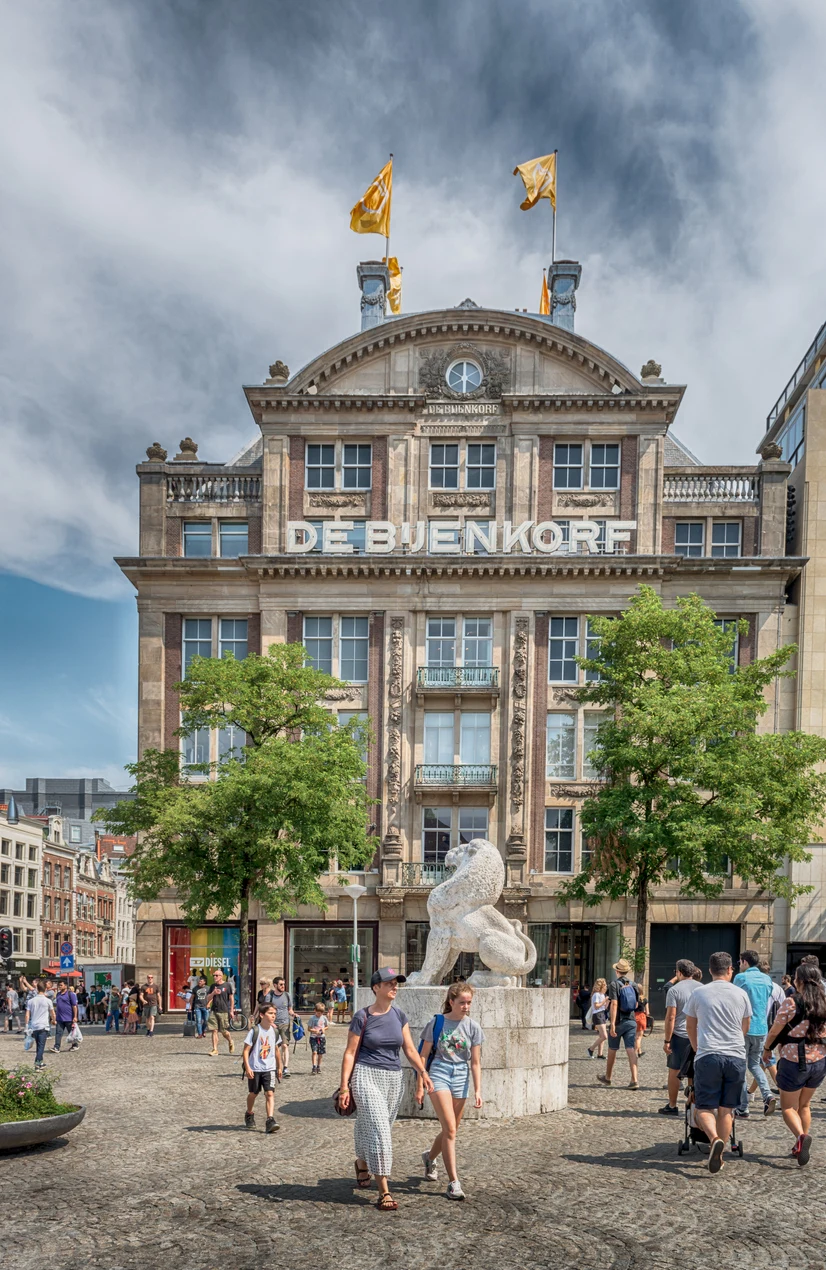
de Bijenkorf is a Dutch premium department store with 7 stores and an extensive online range spanning fashion, beauty, home and lifestyle.
For product management, the choice fell on ConnectingTheDots to manage and enrich product information in a modern omnichannel environment.
With thousands of products, variants, images and content assets, effective product management requires more than central storage. It requires a consistent data model, clear ownership across teams and visibility into where each product sits in the process.
ConnectingTheDots brings those elements together in one PIM environment.
- One data model: for products and variants
- Task-driven workflows: with clear ownership
- Visibility: into data quality and progress from one environment
The challenge: managing product data with growing complexity.
de Bijenkorf works with large volumes of product information every day. Collections follow one another in quick succession, which means large amounts of product data flow into the PIM every day, belonging to new products.
That includes specifications, variants, imagery, copy, languages and channel-specific content.
Over time, the previous PIM environment became harder to manage as customisation increased and teams had less visibility into the overall process.
The challenge was therefore not simply to centralise product information.
de Bijenkorf needed a more flexible foundation for managing product data, responsibilities and workflows through one consistent structure.
One data model for greater consistency.
ConnectingTheDots provides a shared data model for products, variants and classifications.
The same structure can be used regardless of the channel or language in which the information will eventually appear.
This makes it easier to:
- capture product information consistently;
- manage variants in a predictable way;
- use shared data definitions across teams;
- introduce changes in a controlled way.
A common data model reduces the risk of different teams or channels developing their own interpretation of the same product structure.
Read more about Data Model & Structure.
From separate hand-offs to efficient collaboration.
Multiple teams at de Bijenkorf work together on the same product information.
Think of completing and checking product specifications, photography, copywriting and other steps in the content process.
Each team has a specific view within the workflow, so employees don't have to work out for themselves where a product stands or who still needs to act. The workflow also triggers automated actions. Such as internally ordering samples of new products from the warehouse for use in the photo studio to shoot the product imagery.
The workflow thereby makes the dependencies between teams explicit. As a result, collaboration depends less on separate files, email or informal hand-offs.
Read more about Workflows & AI.
Making quality and progress visible.
A workflow only works well if teams can see where attention is required.
Visibility into data quality and progress is therefore an important part of the setup.
Teams can see:
- which information is complete;
- which products still need attention;
- what the completeness of a product is, and which data still needs to be added;
- which stage a product has reached;
- where work is being held up.
This makes product readiness less subjective.
Instead of relying on individual judgement to decide whether a product is ready, teams can work from defined statuses and quality criteria.
Read more about Reporting & Analytics.
One foundation for omnichannel product information.
de Bijenkorf manages product information centrally, while the same product foundation can be used for different channels, such as debijenkorf.nl and debijenkorf.be.
This means product information does not have to be rebuilt for every channel.
The result.
de Bijenkorf works from one PIM platform in which product data, roles and workflows come together in a structured process.
- one consistent data model for products and variants;
- central product information for multiple channels and business systems;
- workflow-driven collaboration between teams;
- clear insight into status and progress;
- governance of data quality;
- less reliance on separate files and hand-offs.
The setup helps teams bring product information to publication consistently and through a clear process.
For de Bijenkorf, PIM is therefore not only about centrally managing product information. The value lies in the combination of a consistent data model and workflow, combined with clear ownership and insight into the progress of every product.