


Wehkamp manages 2.5M+ SKUs through one scalable product data hub.
One hub. More control. Live faster.
Wehkamp is a major Dutch online retailer with a broad consumer assortment and 2.5M+ SKUs managed through its central product data environment.
Wehkamp is a Dutch online retailer with a broad assortment, with more than 2.5 million SKUs managed centrally in ConnectingTheDots PIM.
At that scale, PIM is more than a repository for product content. The platform needs to ingest supplier data, support multiple labels, coordinate workflows, maintain visibility into data quality and distribute changes rapidly to customer-facing channels.
ConnectingTheDots PIM forms the central product data hub for this: from automated supplier integrations to real-time publication to the webshop and app.
- 2,500,000+: SKUs managed centrally
- Automated supplier integrations: for product data and imagery
- For multiple labels: Wehkamp and kleertjes.com
- Automatic product data enrichment: via Fashion Cloud and VuuH
- Real-time synchronisation: with webshop and app
- Dozens of users: working concurrently in the same environment
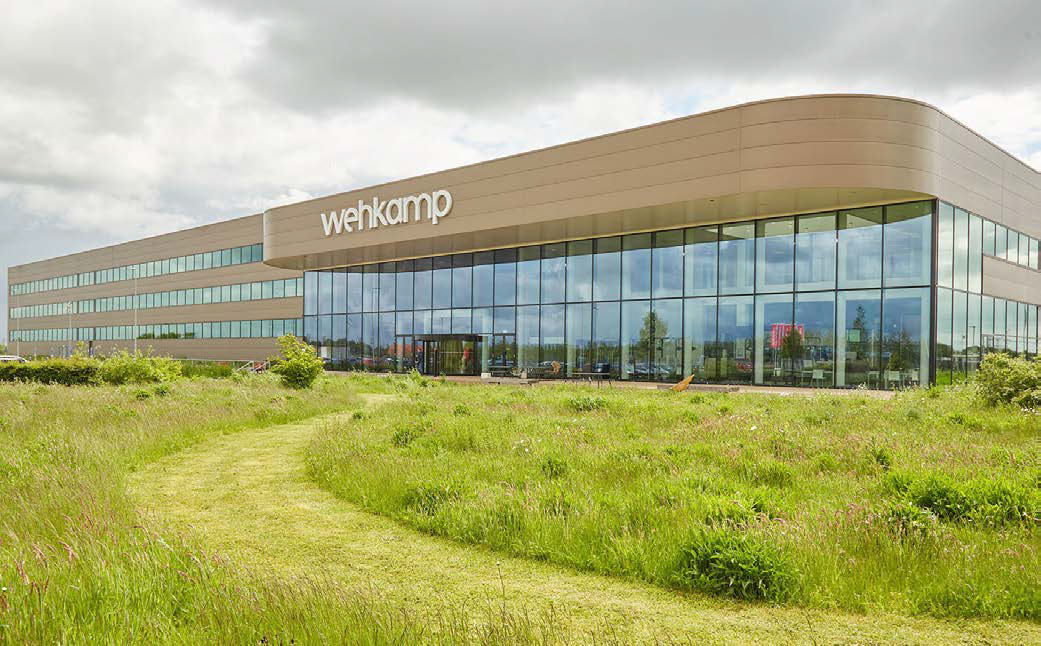
The challenge: product data at enterprise scale.
Wehkamp manages a large and continually changing product catalogue spanning many categories and variants.
Product information arrives from different sources and ultimately needs to support multiple digital experiences.
As product volume and user numbers increase, operational complexity grows with them.
The challenge extends beyond maintaining product content. Teams also need to know:
- how can we enrich product data efficiently;
- how are the work processes of different category teams brought together in an effective workflow;
- where can automation be applied in the process of new product introductions;
- how is the time to market of new products shortened;
- how does data quality remain visible;
- how is compliance data managed centrally?
This requires a central platform that supports the product data lifecycle rather than simply storing product records.
Automating supplier data ingestion.
Automated supplier ingestion through Import & Onboarding is an important part of the architecture.
Wehkamp receives product information and imagery through supplier integrations including Fashion Cloud and Vuuh.
That data is brought into the product data process automatically.
This reduces reliance on manual hand-offs between suppliers and PIM.
At Wehkamp's scale, that matters. If each supplier update requires repeated manual processing, operational workload increases alongside catalogue growth. Read more about Supplier Data Onboarding.
2,500,000+ SKUs from one central product foundation.
More than 2.5M+ SKUs are managed centrally in PIM.
From one PIM platform, teams can manage, enrich, review and prepare product information for publication to the various sales channels.
The central product foundation supports multiple labels, including Wehkamp and kleertjes.com.
The labels can be supported from the same product data enrichment process, while brand and assortment differences are preserved.
This reduces the need to maintain completely separate product data environments for every label. See also Multi-brand Product Operations.
A shared data model with room for different labels.
Centralisation does not mean every label has to use the same assortment structure or presentation.
Differences between labels can still be reflected in:
- assortment;
- classification;
- content;
- brand presentation;
- channel requirements.
The strength lies in using one central product database for all labels, without each brand or label having to maintain its own separate product data.
This creates a more manageable architecture as multiple labels depend on the same product data platform.
Automation with AI.
In addition to automatic product data enrichment via Fashion Cloud and VuuH, AI is used for further automation.
AI is used to supplement product attributes, product descriptions and metadata, for both new and existing products and for the different labels.
By applying AI within PIM, product data can be enriched automatically on a large scale, without the amount of manual work increasing proportionally.
Real-time synchronisation with the webshop and app.
Product data only creates value when changes become available in the channels where customers use them.
Wehkamp uses Apache Kafka to support real-time synchronisation between the product data environment and downstream applications.
This allows changes made in PIM to be propagated rapidly to the webshop and app through Publishing & Channels.
The architecture shortens the path between product management and digital publication.
Rather than relying solely on scheduled exports, changes can move through an event-driven data pipeline.
Dozens of users, one shared operating process.
Dozens of users work with product information concurrently at Wehkamp.
At that scale, teams need visibility into:
- ownership;
- products requiring attention;
- outstanding tasks;
- workflow progress;
- data quality.
Workflows & AI, task allocation and dashboards from Reporting & Analytics give teams a shared view of product readiness and progress.
This reduces the need to coordinate complex product processes through disconnected communication and manual tracking.
Making compliance part of the product data model.
Alongside commercial product content, Wehkamp manages information required for compliance and sustainability reporting.
This includes:
- material data;
- packaging information;
- certificates;
- information used for Extended Producer Responsibility (EPR) reporting.
By maintaining this information as part of the central product model, compliance data does not need to sit in a separate process alongside product content.
Compliance data is managed centrally and made available for reporting, which makes it easier to manage, review and reuse.
From product data to a controlled data lifecycle.
The combination of supplier integrations, central product management, workflows and real-time distribution turns PIM into more than a content repository.
Teams can see:
- where data originates;
- how far a product has progressed;
- what information is still missing;
- which changes have been made;
- where product information is being distributed;
- for different labels.
That visibility becomes more important as automation increases.
At high volumes, scalability depends not only on processing more data, but on retaining control over quality, status and exceptions.
The result.
Wehkamp operates one scalable PIM platform for an assortment of more than 2.5 million SKUs.
- 2.5M+ SKUs managed centrally;
- dozens of users working concurrently from the same environment;
- supplier data and imagery delivered automatically via supplier integrations;
- multiple labels supported from one central product foundation;
- real-time synchronisation with webshop and app;
- workflows and dashboards for progress and data quality;
- automatic product data enrichment via AI;
- compliance and sustainability data managed centrally.
Supplier data comes in automatically and is enriched via Fashion Cloud, VuuH and AI. Teams then manage and enrich the product information centrally where needed, for multiple labels.
Governance and changes remain visible, while updated product data is made available to the digital channels in real time.